

For the first time in Malawi’s 61-year political history, most media outlets, including the Malawi Spotlight, have noted a positive development in the gender inclusion efforts within Malawi politics. Nine women have been nominated as running mates for the September 16, 2,025 presidential elections, marking what advocates describe as a potential watershed moment for gender inclusion in the southern African nation’s male-dominated political landscape.
As reported by Deutsche Welle, this unprecedented development occurs as women constitute 57.1% of registered voters, yet continue to face significant barriers to meaningful political participation and representation.
The surge in female vice-presidential nominees represents a dramatic shift from previous elections, including the nullified 2019 contest and the court-sanctioned 2020 fresh presidential election, both of which featured no female candidates or running mates.
Among the women making history are Jane Ansah, partnering with former president Peter Mutharika of the Democratic Progressive Party (DPP), and Vitumbiko Mumba, chosen by incumbent President Lazarus Chakwera of the Malawi Congress Party (MCP) despite constitutional norms that typically favor the First Deputy President.
However, political experts remain divided on whether this development signals genuine progress toward gender inclusion or represents calculated political maneuvering designed to appeal to specific voter demographics without addressing underlying structural barriers that have historically marginalized women in Malawian politics.
Malawi’s Complex Gender Inclusion Landscape
The significance of this electoral milestone becomes clearer when examined against Malawi’s broader struggle for gender inclusion in political leadership. According to Afrobarometer’s 2024 data, Rwanda leads African nations with 61% female parliamentary representation, followed by Namibia at 50% and Senegal at 46%, while Malawi maintains approximately 20% female representation in the National Assembly—a figure that, while improved from 16.7% in 2014, remains well below regional and international standards for gender inclusion.
Sainala Kalebe, a lecturer specializing in political leadership at the Catholic University of Malawi, provides important context for understanding the limitations of this apparent progress toward gender inclusion. Speaking to Deutsche Welle, she emphasized that “the women in question are running mates rather than presidential candidates—putting them in a subordinate position.” This observation highlights a fundamental tension in discussions about gender inclusion: the difference between symbolic representation and meaningful political power.
The African Union’s recent engagement with Malawian stakeholders on women’s political participation ahead of the 2025 elections underscores the continental significance of gender inclusion efforts. Led by Special Envoy Bineta Diop, the May 2025 Multi-Stakeholder Conference in Lilongwe identified persistent legal, institutional, economic, and cultural barriers that continue to hinder women’s full engagement in political leadership, despite women’s numerical advantage in the voter registration rolls.
According to the Malawi Electoral Commission, 4,114,720 of the 7,203,390 registered voters are female, representing approximately 57.1% of the electorate. This demographic reality creates what political analyst Wonderful Mkhutche describes as a strategic imperative: “Women make up the largest voting bloc in Malawi. If political parties are serious about winning, they must also be serious about women’s leadership.”
Strategic Calculations and Gender Inclusion Skepticism
Despite the historic nature of these nominations, political analysts express caution about their potential impact on advancing meaningful gender inclusion. Ernest Thindwa, a prominent political analyst, argues that “regional balancing remained a stronger influence on choice of running mates than gender representation,” suggesting that traditional electoral calculations continue to overshadow gender inclusion considerations.
Research supports this skepticism about the electoral impact of gender inclusion initiatives. Thindwa notes that “voting patterns show that women have not come together to rally behind female candidates. They are dispersed as they vote along party lines. So, with or without a female running mate, the effect on voting outcomes would still be the same.”
This analysis reflects broader patterns observed across sub-Saharan Africa, where women’s political representation has increased significantly—from 9.8% to 27.1% over three decades—but often through quota systems and institutional mechanisms rather than organic electoral support for gender inclusion. The effectiveness of these approaches in promoting substantive gender inclusion remains debated among scholars and practitioners.
Kalebe further emphasizes the structural limitations facing these female running mates in their pursuit of gender inclusion. She notes that, “with the exception of the Democratic Progressive Party, the political parties with women as running mates are smaller ones, whose only chance of succeeding in the election would likely be through post-election coalitions.” This reality means that “these running mates will find themselves bargaining once more, to get into power, once the elections are over.”
The skepticism extends to questions about the genuine commitment to gender inclusion versus performative politics. As DW correspondent Mirriam Kalizza observed, many Malawians believe that some women were chosen as running mates as part of a “box-ticking exercise, rather than out of a genuine desire to put women at the forefront of political leadership.”
Regional Context and Gender Inclusion Benchmarking
Malawi’s tentative progress toward gender inclusion occurs within a broader African context where several countries have achieved remarkable advances in women’s political participation. Rwanda’s transformation stands as the continental exemplar, with women holding more than two-thirds of parliamentary seats and 50% of cabinet positions, representing the world’s highest level of female political representation and a model for gender inclusion.
Namibia and Rwanda rank 6th and 7th globally in the World Economic Forum’s Global Gender Gap Index, having closed 80.9% and 80.5% of their gender gaps respectively. These achievements result from deliberate constitutional provisions, quota systems, and sustained political commitment to gender inclusion that goes beyond electoral calculations to encompass comprehensive policy frameworks.
The contrast between these regional leaders and Malawi’s current position highlights both the potential and the challenges for advancing gender inclusion. Countries like Namibia, South Africa, and Mozambique have utilized proportional representation electoral systems combined with voluntary or mandated quotas to achieve over 40% female parliamentary representation, demonstrating that institutional design can significantly impact gender inclusion outcomes.
However, the African experience also reveals the limitations of focusing solely on numerical representation. As research from International IDEA indicates, countries that experienced violent liberation struggles—including Angola, Mozambique, Namibia, South Africa, and Zimbabwe—often developed governance practices that prioritized equality across gender lines, creating more conducive environments for gender inclusion than countries with peaceful transitions.
The diversity of approaches to gender inclusion across Africa suggests that Malawi’s current development, while significant, represents only one potential pathway among many for advancing women’s political participation and representation.
Joyce Banda: The Gender Inclusion Precedent and Current Campaign
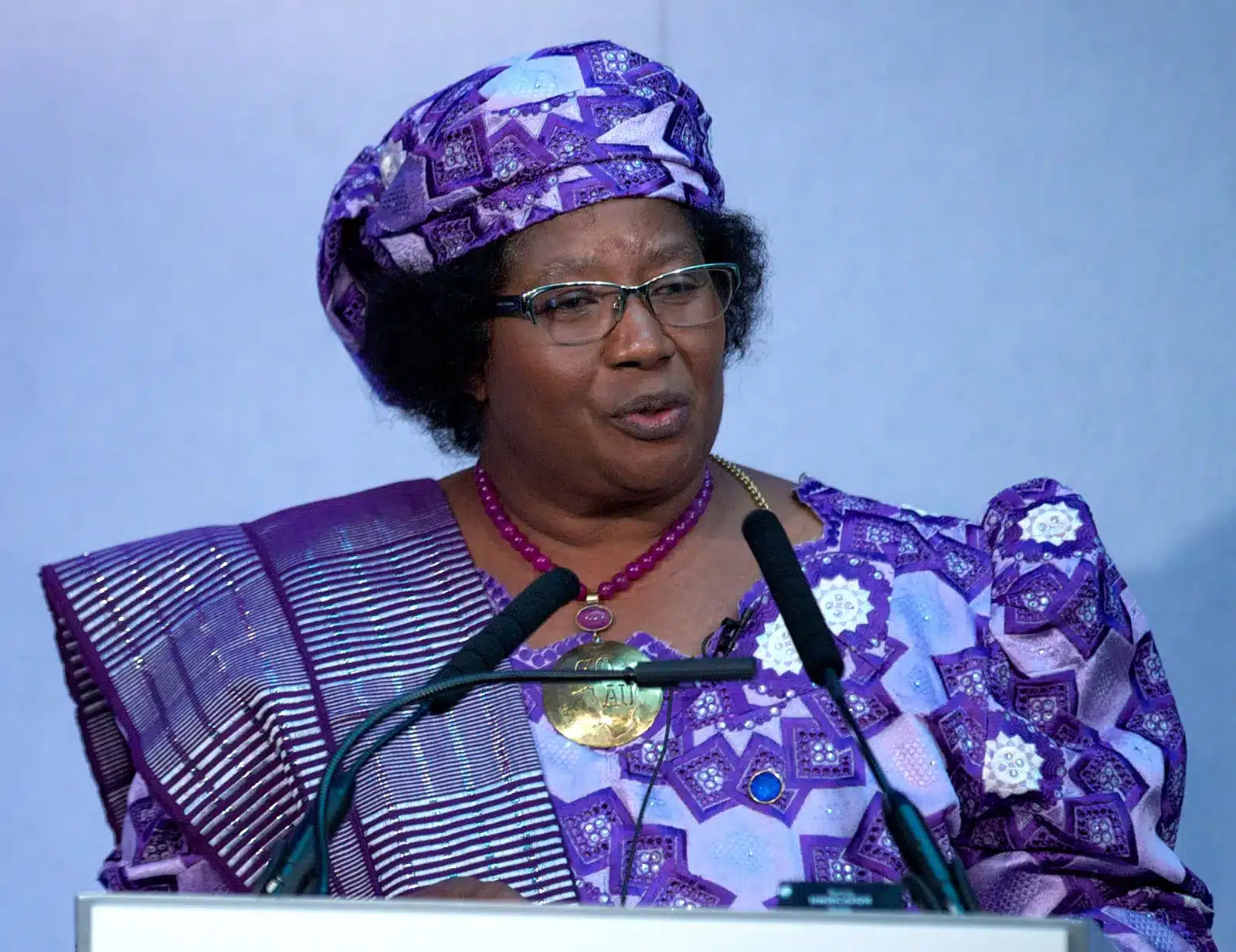
The 2025 elections feature Joyce Banda as the sole female presidential candidate, representing a crucial test case for gender inclusion in Malawi’s executive leadership. The 74-year-old educator and women’s rights activist made history in 2012 when she became Malawi’s first female president, ascending from the vice-presidency following the death of Bingu wa Mutharika.
Banda’s previous presidency offers important insights into both the possibilities and constraints of gender inclusion in Malawian politics. Her tenure was marked by efforts to promote women’s rights and economic reforms, but also by political challenges that ultimately led to her electoral defeat in 2014 and subsequent four-year exile amid corruption allegations.
Her return to Malawian politics and current presidential campaign with running mate Khumbo Kachali—her former vice-president during 2012-2014—represents a unique experiment in gender inclusion at the highest levels of political leadership. Unlike the female running mates who occupy subordinate positions, Banda’s candidacy directly tests Malawian voters’ willingness to support female executive leadership.
The choice of Kachali as her running mate also illustrates the complex strategic calculations involved in promoting gender inclusion while addressing regional balance considerations that remain influential in Malawian electoral politics. Their previous governing experience provides a track record for evaluation while raising questions about continuity versus change in approaches to gender inclusion.
Banda’s campaign messaging emphasizes her commitment to women’s empowerment and economic development, themes that resonate with calls for enhanced gender inclusion while appealing to broader concerns about economic management and social progress. Her ability to mobilize female voters while building broader coalitions will provide crucial evidence about the electoral viability of gender inclusion as a political strategy.
Economic Priorities and Gender Inclusion Electoral Dynamics
The electoral context surrounding discussions of gender inclusion reflects broader socio-economic challenges that shape Malawian political priorities. According to Afrobarometer’s August 2025 study, food shortages top the list of “most important problems Malawians want the government to tackle,” followed by cost of living concerns, farming issues, health care, economic problems, and corruption.
This hierarchy of voter concerns raises important questions about the electoral relevance of gender inclusion initiatives when citizens face immediate survival challenges. Kalebe suggests that voters would not be “persuaded by the gender ticket alone, unless the parties combine the gender ticket with the other pressing issues,” indicating that gender inclusion must be integrated with economic and social policy platforms to achieve electoral resonance.
The economic context also affects gender inclusion indirectly through its impact on women’s political participation. With more than two-thirds of Malawians living in extreme poverty according to World Bank data, economic constraints limit women’s ability to engage in political activities, fund campaigns, or take time away from income-generating activities to participate in political processes.
Research on women’s political participation in Africa consistently identifies economic barriers as among the most significant obstacles to gender inclusion. The costs associated with campaigning, including transportation, communication, and materials, disproportionately affect female candidates who typically have less access to financial resources than their male counterparts.
The intersection of economic challenges and gender inclusion also appears in policy discussions, where women’s political participation is often framed in terms of economic empowerment and development outcomes rather than as an intrinsic democratic right. This framing can both support and constrain gender inclusion efforts, depending on how successfully advocates connect women’s political participation to broader development goals.
Grassroots Progress and Local Gender Inclusion Achievements
While national-level discussions about women inclusion generate skepticism among political analysts, Malawi has achieved notable progress in gender inclusion at local levels that provides foundations for broader transformation. Juliana Kaduya became Lilongwe City’s first female mayor in 2019, serving until 2021, followed by Esther Sagawa’s election as the city’s second female mayor in 2024.
These local achievements in gender inclusion demonstrate that barriers to women’s political participation can be overcome through sustained effort and strategic positioning. The success of female mayoral candidates in Malawi’s capital city provides evidence that voters are willing to support women candidates when presented with compelling qualifications and platforms.
Catherine Gotani Hara’s role as Malawi’s first female Speaker of the National Assembly since 2019 represents another significant milestone in gender inclusion at the national level. Her continued service and recognition for leadership and advocacy demonstrate that women can effectively exercise high-level political authority when given opportunities to do so.
The Women’s Legal Resource Centre (WOLREC), led by Executive Director Maggie Kathewera Banda, has emerged as a prominent advocate for gender inclusion, describing the current surge in female running mates as evidence of “real progress toward achieving Malawi’s commitments under the Gender Equality Act and SDG 5.”
Civil society organizations, including the 50-50 Campaign that advocates for 50% female parliamentary representation, have maintained pressure for enhanced gender inclusion despite political resistance and cultural barriers. Their efforts to align Malawi’s representation with its demographic composition—where women constitute 57.1% of registered voters—illustrate the potential for sustained advocacy to influence political outcomes.
The Women Manifesto Movement has engaged presidential candidates from major parties to sign commitment cards, demonstrating organized efforts to ensure that gender inclusion remains a priority regardless of electoral outcomes. These grassroots initiatives provide important foundations for translating symbolic representation into substantive policy change.
Cultural Barriers and Gender Inclusion Resistance
The mixed public reactions to the surge in female running mates reveal underlying cultural tensions that continue to constrain gender inclusion efforts in Malawi. While women, young people, and gender equality advocates express excitement about these historic nominations, significant skepticism persists among traditionalists and political loyalists who question both the qualifications and political influence of the nominated women.
Cultural barriers to gender inclusion in Malawi reflect broader patterns observed across sub-Saharan Africa, where traditional gender roles and patriarchal power structures continue to influence political participation despite legal and constitutional protections for women’s rights. The persistence of these barriers suggests that achieving meaningful gender inclusion requires sustained cultural transformation alongside institutional reforms.
Research on women’s political participation in Africa identifies cultural factors as among the most resistant to change, often requiring generational shifts rather than immediate policy interventions. The importance of addressing cultural barriers to gender inclusion appears in the mixed reactions reported by Malawian citizens, where enthusiasm among some groups contrasts sharply with skepticism among others.
The questioning of female running mates’ political influence and recognition reflects deeper assumptions about women’s capabilities for political leadership that persist despite evidence of successful female political leaders both within Malawi and across the region. These assumptions create additional barriers to gender inclusion by requiring women candidates to overcome presumptions about their qualifications and effectiveness.
Violence Against Women in Politics (VAWP) represents another significant cultural barrier to gender inclusion that the African Union has specifically highlighted in its engagement with Malawian stakeholders. The AU’s emphasis on codes of conduct to address VAWP indicates recognition that cultural change requires active intervention rather than passive evolution.
Electoral System Considerations and Inclusion Mechanisms
Malawi’s electoral system presents both opportunities and constraints for advancing inclusion through institutional design. The requirement that presidential candidates secure more than 50% of valid votes, potentially triggering runoff elections, creates opportunities for coalition building that could enhance the influence of female running mates and gender advocates.
The possibility of post-election coalitions, identified by Kalebe as likely scenarios for smaller parties with female running mates, introduces additional complexity to gender inclusion calculations. These arrangements could potentially elevate women to significant government positions through negotiated power-sharing, but could also marginalize them if gender inclusion is not prioritized in coalition agreements.
Comparative analysis of electoral systems across Africa suggests that proportional representation systems tend to facilitate higher levels of female political participation than first-past-the-post systems. However, Malawi’s mixed system, with presidential elections using majority rule and parliamentary elections using constituency-based competition, creates variable incentives for gender inclusion across different levels of government.
The adoption of quotas has proven effective in advancing gender inclusion in countries like Rwanda, Uganda, and Kenya, but Malawi has relied primarily on voluntary party commitments rather than constitutional mandates. This approach places greater emphasis on political will and strategic calculation rather than institutional requirements for gender inclusion.
Regional experiences suggest that constitutional provisions for gender inclusion tend to produce more sustainable advances in women’s political participation than voluntary measures alone. The current surge in female running mates could represent either a transitional moment toward more systematic gender inclusion or an anomalous development driven by specific electoral circumstances.
Media Coverage and Gender Inclusion Narratives
The international attention surrounding Malawi’s female running mates reflects growing global interest in gender inclusion as both a democratic value and a development priority. Coverage by international outlets like Deutsche Welle helps amplify discussions about gender inclusion while potentially influencing domestic political calculations about the electoral value of women candidates.
However, media coverage of gender inclusion often emphasizes breakthrough moments and historic firsts rather than examining the substantive policy implications of increased women’s political participation. This pattern can contribute to the perception that gender inclusion represents symbolic rather than meaningful political change.
The emphasis on numbers—nine female running mates, 57.1% female voter registration, 20% female parliamentary representation—provides important benchmarks for measuring progress toward gender inclusion but may obscure qualitative questions about the influence and effectiveness of women’s political participation.
Research on media coverage of women politicians across Africa indicates persistent patterns of focusing on personal characteristics, family relationships, and fashion choices rather than policy positions and political capabilities. These coverage patterns can reinforce cultural barriers to gender inclusion by emphasizing traditional gender roles rather than political competence.
The framing of gender inclusion as either “genuine transformation” or “strategic calculation” in political analysis reflects broader tensions about the motivations behind increased women’s political participation. This dichotomy may oversimplify complex realities where strategic and principled motivations often intersect in promoting gender inclusion.
Future Implications for Malawian Women
The outcomes of the September 16, 2025 elections will provide crucial evidence about the trajectory of fr integrating more wo, elections will provide crucial evidence about the trajectory of fr integrating more womenpmen in Malawi’s politics and its potential impact on broader democratic development. SuccThe successess or failure of female running mates to influence electoral outcomes will shape future strategies for advancing women’s political participation.
The potential for runoff elections creates scenarios where female running mates could play decisive roles in coalition formation and government composition, potentially accelerating progress toward women inclusion through negotiated power-sharing arrangements. Alternatively, marginalization of women inclusion considerations in post-election negotiations could demonstrate the continued subordination of women’s political participation to other strategic priorities.
The performance of Joyce Banda’s presidential campaign will provide particularly important evidence about Malawian voters’ willingness to support female executive leadership and the viability of women inclusion as an electoral strategy. Her success or failure could influence future decisions by political parties about nominating women for high-level positions.
Institutional developments, including potential constitutional reforms or electoral law changes, could emerge from this electoral cycle depending on how effectively womeninclusion advocates leverage increased attention to women’s political participation. The African Union’s engagement and international attention create opportunities for sustained pressure for institutional changes that support women inclusion.
The broader implications extend beyond Malawi to regional and continental discussions about women inclusion in African politics. As a country with significant democratic credentials but limited progress on women’s political participation, Malawi’s experience could influence approaches to gender inclusion in other African democracies facing similar challenges.
Navigating the Complex Terrain of Political Gender Inclusion
The historic nomination of nine women as vice-presidential candidates in Malawi’s 2025 elections represents a significant moment in the country’s journey toward political gender inclusion, but one that requires careful analysis to understand its true implications for democratic transformation. While advocates celebrate this unprecedented development as evidence of progress toward greaterwomen inclusion, political analysts’ skepticism reflects legitimate concerns about the gap between symbolic representation and meaningful political power.
The complex dynamics surrounding these nominations illustrate broader challenges facing gender inclusion efforts across Africa, where numerical gains in women’s political participation often occur alongside persistent structural barriers that limit women’s influence and effectiveness. The tension between strategic electoral calculations and genuine commitment to gender inclusion reflects similar debates occurring across the continent as political actors navigate competing pressures for democratic reform and electoral success.
Malawi’s experience also demonstrates the importance of distinguishing between different types of progress toward gender inclusion. Local-level achievements, including female mayoral victories and the first female National Assembly Speaker, provide evidence that barriers to women’s political participation can be overcome through sustained effort and strategic positioning. However, these successes have not automatically translated into broader transformation of women inclusion at national levels.
The regional context, particularly the examples set by Rwanda and Namibia in achieving high levels of gender inclusion through constitutional provisions and quota systems, suggests alternative pathways for advancing women’s political participation that go beyond voluntary party commitments. These examples illustrate that meaningful gender inclusion requires institutional design and sustained political commitment rather than relying solely on electoral dynamics and strategic calculations.
The economic and cultural barriers identified by political analysts and civil society organizations underscore the complexity of achieving sustainable gender inclusion in contexts where immediate survival concerns compete with longer-term democratic development goals. The need to integrate gender inclusion with responses to pressing economic challenges reflects broader requirements for holistic approaches to democratic reform.
As Wonderful Mkhutche emphasizes, the current moment requires institutionalizing women’s political participation “not as a campaign gimmick, but as a governance principle.” This observation captures the essential challenge facing gender inclusion advocates: translating symbolic breakthroughs into systematic changes that ensure sustained progress toward gender equality in political representation and influence.
The September 16 elections will provide crucial evidence about the direction of gender inclusion in Malawi, but the broader transformation required for meaningful gender equality will likely extend well beyond any single electoral cycle. The foundations laid through current advocacy efforts, local-level successes, and international engagement create possibilities for sustained progress, but realizing these possibilities will require continued commitment from political leaders, civil society organizations, and citizens committed to democratic development.
The ultimate significance of this historic moment forwomen inclusion may not be determined by immediate electoral outcomes but by its contribution to longer-term processes of cultural and institutional change that gradually expand opportunities for women’s political participation and influence. As Malawi navigates this critical juncture, the choices made by political leaders, voters, and advocates will shape not only the country’s democratic trajectory but also its contribution to broader discussions about gender inclusion in African politics.