


The International Fund for Agricultural Development’s recent comprehensive stocktaking of Information and Communication Technology for Development (ICT4D) initiatives in Malawi illuminates the expanding role of agricultural technology in transforming rural livelihoods and addressing persistent development challenges.
As documented in IFAD’s latest report, the organization’s Malawi country team, in collaboration with programme management units, has identified several promising agricultural technology practices implemented across the country’s portfolio, ranging from e-extension platforms to machine learning applications for impact analysis.
This stocktaking exercise represents more than a technical assessment—it demonstrates how strategic deployment of technology in agriculture can address fundamental barriers facing Malawi’s 16.8 million people, over 80% of whom depend on agriculture for their livelihoods.
The assessment encompasses digitally powered learning tools for household training, crowdfunding mechanisms, tailored digital financial solutions, and sophisticated analytical tools that collectively form a comprehensive agricultural technology ecosystem.
Malawi’s Agricultural Technology Landscape and Rural Development Context
The significance of IFAD’s agricultural technology initiatives becomes clear when examined against Malawi’s broader economic and social context. With more than 95% of rural populations classified as poor and 84% of the total population living in rural areas, the country faces persistent challenges in improving agricultural productivity and rural livelihoods. Agriculture generates over 38% of the gross domestic product while providing employment for approximately 80% of the workforce, making effective agricultural technology deployment crucial for national development.
Research conducted across multiple districts reveals that smallholder farmers face interconnected challenges that technology can help address. Limited access to extension services, market information, and financial resources constrains productivity, while climate change introduces additional uncertainties that traditional farming practices struggle to accommodate. The country’s agricultural sector remains characterized by low input use, minimal mechanization, and heavy dependence on rainfed cultivation, creating substantial opportunities for agricultural technology interventions.
IFAD’s approach recognizes that technology deployment must address both technical capabilities and socio-economic barriers. With literacy levels remaining low among rural farmers and limited access to electricity reaching only 7% of the population, successful agricultural technology initiatives require careful design that accommodates local constraints while leveraging available infrastructure, particularly the 88% mobile network coverage that provides foundations for digital service delivery.
Comprehensive Agricultural Technology Solutions Across IFAD’s Malawi Portfolio

The stocktaking exercise reveals a diverse array of technology solutions implemented through IFAD-supported programmes, each addressing specific aspects of rural development challenges. E-extension platforms represent a cornerstone of these efforts, utilizing digital channels to deliver agricultural advice, weather information, and market updates directly to farmers’ mobile devices. These platforms have proven particularly valuable during the COVID-19 pandemic, when traditional extension services faced significant constraints.
Digitally powered learning tools constitute another critical component of the agricultural technology portfolio. These systems enable household-level training on improved farming practices, financial literacy, and business development through interactive mobile applications and multimedia content. The tools accommodate varying literacy levels through voice-based interfaces and visual demonstrations, ensuring broader accessibility among target populations.
Agricultural technology innovations extend to financial services through tailored digital solutions that address smallholder farmers’ unique needs. Mobile money platforms facilitate savings, payments, and credit access, while specialized agricultural insurance products protect against weather-related risks. These financial technology solutions help farmers overcome traditional barriers to formal financial services, enabling greater investment in productive activities.
Machine learning applications represent the most sophisticated element of IFAD’s technology approach. These systems analyze vast datasets to predict project impacts, optimize resource allocation, and identify successful intervention patterns. By processing agricultural, meteorological, and socio-economic data, machine learning tools enable evidence-based decision-making that enhances programme effectiveness and development impact.
Multi-Organization Collaboration and Innovation Ecosystem
IFAD’s agricultural technology initiatives operate within a broader ecosystem of digital innovation in Malawi that includes collaboration with government agencies, international organizations, and private sector partners. The Food and Agriculture Organization (FAO), working with Malawi’s Department of Agriculture Extension Services, has distributed smartphones to smallholder farmers in Kasungu and Mzimba districts, enabling access to market information, agricultural advisory services, and digital marketing platforms.
Monica, a smallholder farmer in Kasungu district, exemplifies the impact of these agricultural technology interventions. As she explains, “Now with a smart phone we will be able to get market information and link with markets while we are at home caring for our children. We also get advice from extension workers and from other digital platforms.” This testimony illustrates how agricultural technology addresses both economic and social constraints faced by rural women.
The IBM and Heifer International collaboration through the OpenHarvest platform demonstrates advanced agricultural technology applications in Malawi. This open-source system provides farmers with specialized recommendations based on visual field data, weather forecasts, and crop growth stages analyzed through artificial intelligence and climate modeling. The platform assigns latitude-longitude coordinates to participating farmers’ fields, triggering comprehensive agricultural technology recommendations according to local conditions.
Corporate social responsibility initiatives further expand agricultural technology access. Samsung Innovation Campus has graduated students with programming skills relevant to agricultural technology development, while various fintech companies develop mobile financial services tailored to farmers’ seasonal income patterns. MlimiPay, a Malawian startup, leverages digital technology to extend credit, payments, and savings services specifically designed for agricultural cycles.
Implementation Challenges and Technology Adoption Barriers
Despite promising developments, agricultural technology implementation in Malawi faces significant challenges that require sustained attention and innovative solutions. Research conducted across multiple districts indicates that while over 80% of farmers use mobile money, only 15% utilize these innovations for agriculture-related payments, suggesting substantial gaps between technology availability and meaningful adoption.
Infrastructure limitations constrain broader technology deployment. Electricity access reaching only 7% of the population limits the use of more sophisticated digital tools, while unreliable internet connectivity affects platform performance in remote areas. However, extensive mobile network coverage provides foundations for voice-based and SMS agricultural technology solutions that can operate with basic mobile phones.
Literacy and digital skills represent persistent barriers to agricultural technology adoption. Agricultural Extension Development Officer Kondwani Mponela Mwandila notes that “before having the smart phones and with the COVID-19 pandemic it was hard for us to share information with our farmers.” Digital platforms now enable communication through videos, audios, and documents, but effectiveness depends on farmers’ ability to navigate these technologies.
Economic constraints also limittechnology uptake. Many farmers lack resources to purchase smartphones or pay for data services, while seasonal income patterns create challenges for subscription-based agricultural technology services. The subscription to SMS price alerts for maize farmers, for example, showed insignificant effects on market participation, indicating that information alone may not address deeper structural constraints.
Cultural and social factors influence agricultural technology adoption patterns. Gender disparities significantly affect access, as women farmers often have limited control over household resources needed for technology adoption. Age also plays a role, with older farmers sometimes showing reluctance to adopt new agricultural technology approaches that differ from traditional practices.
Regional Context and Benchmarking
Malawi’s technology initiatives in agriculture occur within a broader African context where multiple countries are prioritizing digital agriculture as a development strategy. Kenya’s digital agriculture programs, supported by partnerships between government, educational institutions, and private sector organizations, have demonstrated significant impact on farmer incomes and productivity. Tanzania’s agricultural technology initiatives focus on mobile-based market information systems, while Ghana emphasiemphasiseszes digital extension services and weather information platforms.
The regional experience suggests that successful agricultural technology deployment requires sustained commitment across multiple stakeholders and adaptation to local contexts. Kenya’s M-Pesa success, which now accounts for 10% of the region’s GDP flows with nearly 146 million active users, demonstrates the transformative potential of well-designed digital financial services. However, replicating such success requires careful attention to regulatory frameworks, infrastructure development, and user education.
IFAD’s global technology strategy, developed in 2019 following comprehensive portfolio assessment, provides frameworks for scaling successful interventions across countries while adapting to local conditions. The organization’s work spans over 70 countries, creating opportunities for cross-country learning and technology transfer that can accelerate technology adoption in Malawi.
South-South cooperation mechanisms enable Malawi to learn from technology successes in countries with similar conditions. Rwanda’s agricultural transformation through digital platforms, Mauritius’s regulatory sandbox approaches, and Zambia’s mobile financial services provide relevant models for scaling agricultural technology interventions.
Economic Impact Assessment
The economic implications of agricultural technology deployment extend beyond immediate productivity gains to broader structural transformation effects. IFAD’s machine learning applications for impact analysis enable systematic assessment of which technology interventions generate the highest returns on investment, providing evidence for scaling decisions and resource allocation.
Agricultural technology interventions demonstrate particular promise in addressing market access constraints that have historically limited smallholder farmer incomes. Digital platforms enable farmers to access price information, connect directly with buyers, and participate in value chains that offer higher returns than traditional marketing channels. The Fall Armyworm Monitoring and Early Warning System (FAMEWS) exemplifies how technology can address specific agricultural production challenges through timely information delivery.
Financial inclusion through technology creates multiplier effects throughout rural economies. When farmers gain access to credit, savings, and insurance services through mobile platforms, their increased investment capacity stimulates demand for inputs, services, and consumer goods. The 600 farmers trained in mobile money usage through the Rural Stimulating Campaign in Zomba district represent potential catalysts for broader economic transformation.
However, measuring the impact of technology in agriculture requires sophisticated methodologies that account for attribution challenges and long-term effects. IFAD’s AI-based intervention dashboard and project performance prediction models provide tools for systematic impact assessment, enabling evidence-based decision-making about agricultural technology investments.
Climate Change Adaptation and Technology Resilience
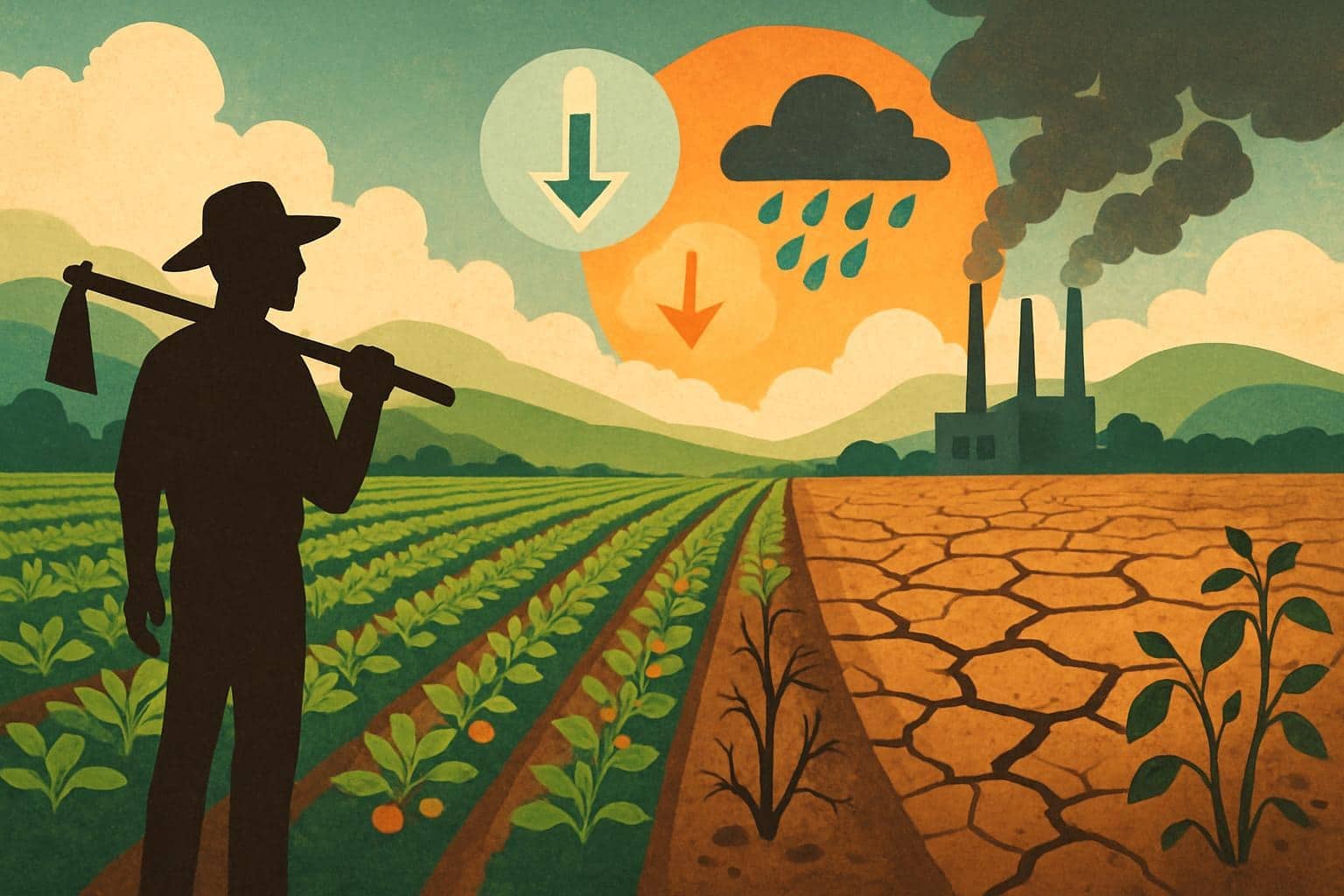
Climate change presents both challenges and opportunities for agricultural technology deployment in Malawi. Increasingly unpredictable rainfall patterns and extreme weather events make traditional farming practices less reliable, creating demand for agricultural technology solutions that enable adaptive management. Weather forecasting platforms, drought early warning systems, and climate-smart agriculture applications become essential tools for farmer resilience.
The OpenHarvest platform exemplifies how agricultural technology can address climate adaptation needs. By providing hyperlocal weather forecasts and AI-powered recommendations based on real-time conditions, the system helps farmers make informed decisions about planting timing, variety selection, and resource allocation. This approach moves beyond reactive responses to climate impacts toward proactive technology-enabled adaptation strategies.
Agricultural technology applications for climate adaptation require integration across multiple information sources and decision-making levels. Geospatial technologies enable monitoring of rainfall patterns, soil moisture, and vegetation health, while mobile platforms deliver actionable information to farmers. Insurance products linked to weather data provide financial protection against climate risks, enabling farmers to invest in productivity improvements despite uncertainty.
The integration of artificial intelligence and machine learning in technology platforms enables increasingly sophisticated climate adaptation capabilities. These systems can process vast amounts of meteorological, agricultural, and socio-economic data to identify optimal farming strategies for specific locations and conditions, supporting both individual farmer decision-making and policy development.
Digital Financial Services and Agricultural Technology Integration
The convergence of digital financial services and agricultural technology represents a particularly promising area for development impact in Malawi. Mobile money platforms provide foundations for agricultural value chain financing, enabling farmers to receive payments for produce, access credit for inputs, and accumulate savings for investment. However, research indicates thattechnology-specific financial services require careful design to align with farmers’ seasonal income patterns and risk profiles.
MlimiPay’s innovation demonstrates how agricultural technology can address specific financial inclusion barriers. The platform’s credit solutions consider the seasonal nature of farmers’ income, ensuring fund availability during critical planting periods. The startup’s expansion from 14 farmers with deposits of 13,685 Kwacha to over 300 farmers with digital accounts illustrates the scalability potential of well-designed technology financial services.
Crowdfunding mechanisms represent an emerging area of agricultural technology innovation that can democratize access to agricultural finance. Digital platforms enable farmers to present investment opportunities to broader networks of potential funders, while mobile payment systems facilitate transaction processing. These approaches can supplement traditional credit sources and enable financing for innovations that formal financial institutions might consider too risky.
The effectiveness of technology financial services depends on addressing foundational barriers to financial inclusion. Illiteracy, limited understanding of banking concepts, and lack of collateral continue to constrain farmers’ access to formal financial services. Digital platforms that provide financial education and simplified interfaces can help overcome these barriers while enabling agricultural technology adoption.
Future Trends and Development Implications
The rapid pace of technological change creates both opportunities and challenges for agricultural technology deployment in Malawi. Artificial intelligence, Internet of Things applications, blockchain technologies, and advanced data analytics represent emerging capabilities that could transform agricultural systems. However, realizing these benefits requires careful attention to infrastructure development, skills building, and inclusive design approaches.
IFAD’s 10-year ICT4D strategy provides frameworks for anticipating and adapting to technological change while maintaining focus on development outcomes. The organization’s emphasis on evidence-based learning and adaptive management enables continuous improvement in agricultural technology approaches as technologies evolve and local conditions change.
The integration of satellite technologies and drone applications offers particular promise for agricultural technology advancement in Malawi. These tools can provide detailed monitoring of crop conditions, soil health, and pest outbreaks, enabling precision agriculture approaches that optimize input use and maximize yields. UNICEF’s African Drones and Data Academy in Malawi demonstrates growing capacity for advanced technology applications.
Blockchain technology applications in agricultural value chains could address transparency and traceability challenges that limit farmers’ access to premium markets. Digital identity systems could enable more inclusive financial services, while smart contracts could automate technology-enabled transactions based on verified conditions.
Measuring Success and Impact Evaluation
IFAD’s comprehensive approach to agricultural technology assessment emphasizes the importance of systematic impact measurement that extends beyond simple adoption statistics. The organization’s AI-powered tools enable analysis of project performance patterns, identification of successful intervention characteristics, and prediction of likely outcomes based on project features.
Key indicators for agricultural technology success include productivity improvements, income enhancement, market access expansion, and resilience building. However, measuring these outcomes requires sophisticated methodologies that account for attribution challenges, spillover effects, and long-term impacts. IFAD’s machine learning applications for impact analysis provide tools for addressing these methodological challenges.
The stocktaking exercise itself represents an important innovation in agricultural technology evaluation. By systematically documenting practices across the portfolio and incorporating programme management unit perspectives, IFAD creates foundations for institutional learning and knowledge sharing. This approach enables identification of best practices and scaling of successful agricultural technology interventions.
International experience suggests that successful agricultural technology programmes typically achieve 60-70% adoption rates among target populations within two years of implementation. For Malawi, achieving similar outcomes could significantly impact agricultural productivity and rural poverty, contributing to broader economic transformation goals outlined in Vision 2063.
Policy Implications and Agricultural Technology Governance
The success of technology in agricultural initiatives depends significantly on supportive policy environments that enable innovation while protecting farmers’ interests. IFAD’s emphasis on policy dialogue with government and other donors reflects recognition that agricultural technology deployment requires coordination across multiple levels and sectors.
Regulatory frameworks for digital financial services, data protection, and agricultural technology standards require careful development that balances innovation promotion with consumer protection. Malawi’s participation in regional initiatives and learning from other countries’ experiences can inform policy development while avoiding common pitfalls.
The integration of agricultural technology considerations into broader development planning ensures that digital initiatives complement other interventions rather than operating in isolation. Vision 2063’s emphasis on agricultural commercialization, industrialization, and urbanization creates opportunities for agricultural technology to contribute to multiple development objectives simultaneously.
Investment in human capital development, including digital literacy training and technical skills building, represents a critical policy priority for sustainable agricultural technology adoption. The Samsung Innovation Campus graduation of programming students and UNICEF’s innovation initiatives demonstrate growing capacity for agricultural technology development within Malawi.
Building Foundations for Sustainable Agricultural Technology Transformation
IFAD’s comprehensive stocktaking of ICT4D initiatives in Malawi reveals both the tremendous potential and persistent challenges associated with agricultural technology deployment in rural development contexts. From the perspective of Malawi Spotlight, the documented portfolio of e-extension platforms, digital financial solutions, machine learning applications, and digitally powered learning tools demonstrates how thoughtful agricultural technology implementation can address multiple dimensions of rural poverty and agricultural productivity.
The experiences of farmers like Monica in Kasungu district, who now access market information and agricultural advice through smartphones, illustrate the transformative potential of well-designed agricultural technology interventions. Similarly, the sophisticated AI-powered recommendations provided through platforms like OpenHarvest show how advanced technologies can be adapted to serve smallholder farmers’ needs while building climate resilience.
However, the mixed results observed across different agricultural technology initiatives underscore the importance of addressing systemic barriers alongside technological solutions. Infrastructure limitations, literacy constraints, and economic barriers require sustained attention and innovative approaches that complement agricultural technology deployment with broader development interventions.
The regional and international experience suggests that successful agricultural technology transformation requires long-term commitment, adaptive management, and coordination across multiple stakeholders. IFAD’s emphasis on evidence-based learning and systematic impact assessment provides foundations for continuous improvement and scaling of successful approaches.
As Malawi pursues its Vision 2063 goals of economic transformation and poverty reduction, agricultural technology initiatives like those documented in IFAD’s stocktaking exercise offer promising pathways for achieving sustainable development outcomes. The challenge lies in scaling successful models while maintaining quality and ensuring that agricultural technology benefits reach the most vulnerable rural populations.
The future of agricultural technology in Malawi depends on continued collaboration between international development organizations, government agencies, private sector partners, and farming communities themselves. IFAD’s comprehensive approach, which combines technical innovation with attention to social and economic constraints, provides valuable lessons for agricultural technology deployment not only in Malawi but across sub-Saharan Africa.
Success will require sustained investment in both technological capabilities and the enabling conditions that support agricultural technology adoption. By building on the foundations established through current initiatives while addressing persistent barriers, Malawi can harness the transformative potential of agricultural technology for rural development and national economic transformation.