

The ominous shadow of the healthcare workforce crisis hangs heavily over Malawi, as we observe a staggering exodus of medical professionals. This mass departure leaves behind a fragile system, precariously balanced on the edge of a catastrophic failure.
As the Malawi Spotlight investigates the turmoil enveloping the country’s health sector, it becomes hauntingly clear that the brain drain of healthcare workers is not just a contributing factor; it is a driving force behind a burgeoning medical crisis that endangers the lives of millions.
The reality of a healthcare system on the brink underscores the urgent need for solutions to avert this impending disaster.
Healthcare Workforce Crisis Reaches Critical Point
The magnitude of Malawi’s healthcare workforce shortage is staggering. According to Think Global Health, the country of 20 million people has only approximately 600 registered medical doctors—a ratio that falls catastrophically short of the World Health Organization’s recommendation of one doctor per 1,000 people. This translates to one doctor serving approximately 33,000 Malawians, making it one of the worst doctor-to-patient ratios globally.
The statistics paint an even grimmer picture when we examine specific healthcare cadres. As reported in Human Resources for Health, Malawi’s health worker-to-patient densities as of 2009 stood at merely 0.019 physicians and 0.343 nursing and midwifery personnel per 1,000 population. Over a decade later, these figures have barely improved, with persistent vacancy rates across all nursing and clinical cadres creating a healthcare desert where essential services remain inaccessible to millions.
The geographical distribution of healthcare workers compounds the crisis further. According to Human Resources for Health, more than half of Malawi’s doctors work in the four central hospitals, leaving vast rural areas—home to over 80% of the population—with virtually no qualified medical personnel. Even in district hospitals that do have a doctor, administrative and leadership tasks consume a considerable portion of their time, forcing much of the clinical work to be completed by mid-level providers with limited training.
Brain Drain Accelerates Healthcare Workforce Depletion
The brain drain phenomenon has reached alarming proportions, as highlighted by The Malawi Medical Journal. A paradoxical situation has emerged where thousands of health professionals’ graduates remain unemployed locally whilst the public health sector desperately needs their services. The country produces approximately 100 medical students annually at Kamuzu University of Health Sciences, along with hundreds of nurses, pharmacists, physiotherapists, and laboratory technologists, yet the Ministry of Health maintains huge vacancy rates due to budget constraints.
The International Monetary Fund continues to remind Malawi’s leadership that the public service wage bill cannot be sustained by the economy, creating a vicious cycle where trained professionals remain idle whilst health facilities operate with skeleton staff. Most of the trained workforce remains within the country but unemployed, unable to contribute to addressing the healthcare crisis due to the government’s inability to fund their salaries.
Research from the Migration Policy Institute reveals that the emigration of health professionals from Malawi led to drastic labour shortages in the early 2000s. By 2004, the entire country had about 250 doctors, whilst the Ministry of Health reported a nearly 80% vacancy rate for registered nurses in 2003 and 65% in 2006. Though international recruitment has somewhat declined due to changed immigration rules, health professionals continue emigrating to other African countries like Botswana and Lesotho, which offer higher wages.
Maternal Mortality Crisis Reflects Healthcare Workforce Shortage
The healthcare workforce crisis manifests most starkly in maternal health outcomes. According to the 2024 Malawi Demographic and Health Survey, despite some improvements, Malawi’s maternal mortality ratio remains at 381 deaths per 100,000 live births, placing it among the 25 countries with the highest maternal mortality rates globally, as noted by Human Rights Watch.
Recent research published in BMJ Open found that obstetric haemorrhage was the predominant cause of death among women admitted in stable condition, whilst those admitted in critical condition primarily died of hypertensive disorders. Most deaths occurred on the day of admission, indicating that whilst women were reaching healthcare facilities, the lack of adequately trained personnel to provide immediate, life-saving interventions proved fatal.
Seed Global Health reports that whilst the maternal mortality rate has improved from 400 to about 380 deaths per 100,000 live births in 2024, significant challenges persist. Healthcare professionals point to disparities in healthcare access between rural and urban communities, long distances women must walk to reach health facilities, and critically, a shortage of trained personnel and limited essential medicines and equipment.
Disease Outbreaks Expose Healthcare System Vulnerabilities
The healthcare workforce shortage has been brutally exposed by recent disease outbreaks. The country is currently battling multiple health emergencies that underscore the system’s fragility. According to the Public Health Institute of Malawi, as of May 2025, Malawi is dealing with several concurrent outbreaks including measles, which has affected over 1,000 people across multiple districts, and an Mpox outbreak with 10 confirmed cases.
The cholera situation remains particularly concerning. Between September 2024 and March 2025, according to UNICEF, 306 cholera cases were registered with 15 deaths across 12 districts. The case fatality rate of 4.9% is significantly higher than the WHO threshold of 1%, indicating severe gaps in treatment-seeking behaviour and effective case management after admission.
During the devastating 2022-2024 cholera outbreak, The Lancet reports that Malawi experienced its deadliest ever outbreak, with 59,126 cases and 1,711 deaths. The outbreak overwhelmed already limited health resources, with facilities struggling to manage increased patient loads amid disruptions to infrastructure. Critically, the shortage of skilled healthcare workers further exacerbated the crisis, hampering efforts to contain the disease and provide adequate care.
Infrastructure Collapse Compounds Healthcare Workforce Challenges
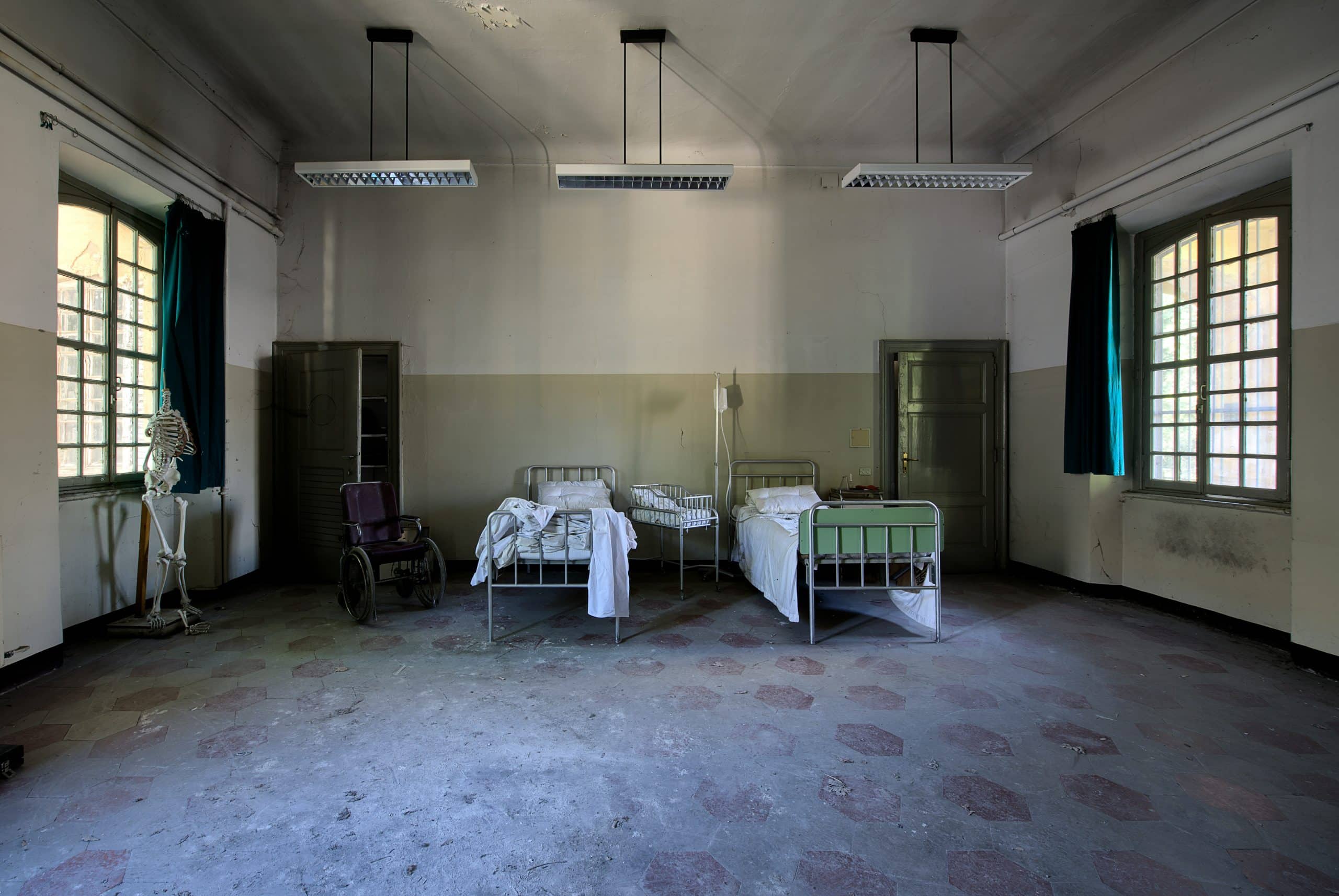
Beyond personnel shortages, Malawi’s healthcare infrastructure is collapsing, creating an environment where even available healthcare workers cannot function effectively. A recent report from urological specialists working in Malawi reveals that healthcare infrastructure is severely limited, with many district hospitals lacking essential equipment and supplies.
At Kamuzu Central Hospital, general wards face severe nursing staff shortages, relying heavily on family members to provide patient care. Due to financial constraints, nurse-led wards are not feasible, placing the responsibility of post-operative recovery on patients and their families. The report describes incidents where patients were left with disconnected catheters overnight and others exhibited early signs of severe pain and sepsis without any observations for several hours.
The Rockefeller Foundation highlights how climate change is further devastating the healthcare system. Cyclone Freddy in 2023 caused a surge in cholera cases, affecting over 2.2 million people and placing unprecedented strain on Malawi’s healthcare system. The cyclone destroyed essential health infrastructure, swept away medical supplies and equipment, and disrupted critical health services across the southern regions.
Mental Health Crisis Emerges as Silent Emergency
Amidst the broader healthcare crisis, Malawi faces an emerging mental health emergency that the depleted healthcare workforce is ill-equipped to address. According to DW, government records indicate that 1,984 suicide cases have been reported since 2019, highlighting a deepening crisis that requires urgent intervention.
Research by mental health advocacy group Sorry I’m Not Sorry reveals that 39% of participants sought therapy for relationship strain, 26% for financial pressure, and 13% for grief and loss. The report notes that many men are suffering physically from their emotional pain, with sleep disturbances, headaches, and chest pains being widespread. Most alarmingly, therapists noted that suicidal thoughts are likely underreported, suppressed beneath layers of shame and fear.
The passage of Mental Health Bill No. 17 of 2025, which replaces the outdated Mental Treatment Act of 1948, represents a significant step forward. The bill decriminalises suicide attempts and prioritises the dignity and well-being of individuals with mental health conditions. However, implementation remains challenging given the severe shortage of mental health professionals in the healthcare workforce.
Child Health and Immunisation Coverage Under Threat
The healthcare workforce crisis is directly impacting child health outcomes and immunisation coverage. According to Oxford Academic, whilst immunisation coverage exceeds 90% for most antigens, full immunisation status remains problematically low, ranging from 65-73% between 2004 and 2015-2016.
More recent data from Frontiers in Public Health shows that whilst overall immunisation coverage was at 72% in the 2019-20 Malawi Multiple Indicator Cluster Survey, significant socioeconomic inequalities exist. The study found pro-rich inequalities in both basic immunisation (0.065) and age-appropriate immunisation (0.09), with wealth, maternal education, and place of residence being significant contributing factors.
The measles outbreak currently affecting multiple districts demonstrates the consequences of these gaps. According to Gavi, 653 confirmed measles cases and one death have been registered since the outbreak began in October 2024. The outbreak necessitated an emergency vaccination campaign that achieved 93% coverage in affected areas, but the need for such interventions highlights the underlying weaknesses in routine immunisation delivery.
Healthcare Financing Crisis Deepens Workforce Shortages
The healthcare workforce crisis is inextricably linked to chronic underfunding of the health sector. According to Human Rights Watch, Malawi’s public healthcare spending falls far short of its commitments under the 2001 Abuja Declaration, where African Union governments pledged to allocate at least 15% of their national budgets to healthcare.
The health budget allocation was 8.8% of the national budget in 2023/24 and 12% in the 2024/25 budget. Whilst this represents improvement, it falls well short of the spending standards required to achieve universal health coverage and address the healthcare workforce crisis. The situation has been further complicated by the suspension of USAID funds by the US administration in early 2025, halting essential support that previously contributed over $350 million annually—more than 13% of Malawi’s health budget.
The Domino Effect on Development and Economic Growth
The healthcare workforce crisis extends far beyond immediate health outcomes, creating a vicious cycle that undermines Malawi’s broader development aspirations. As noted by Think Global Health, Malawi is increasingly becoming a healthcare desert where advanced critical care is impossible to find and emergency interventions are frequently delayed or unavailable.
This reality stifles development and economic growth. Potential investors are reluctant to establish operations in a country where treatable medical emergencies can prove fatal due to infrastructure limitations. The absence of adequate healthcare also means that Malawi’s existing professionals cannot remain healthy and productive as they age, contributing to a broader exodus of skilled personnel across sectors.
The healthcare workforce crisis also perpetuates educational disruption. With limited access to healthcare, families often cannot afford to keep children in school when medical emergencies arise. The lack of healthcare workers in rural areas means that preventable illnesses become debilitating conditions that force families into poverty and children out of school.
Emergency Interventions Required to Prevent Total Collapse
As we examine the trajectory of Malawi’s healthcare system, the evidence overwhelmingly suggests that the brain drain of healthcare workers has moved beyond contributing to a crisis—it has become the primary driver of an imminent healthcare workforce crisis. The combination of inadequate numbers of healthcare workers, poor geographical distribution, crumbling infrastructure, and chronic underfunding has created a perfect storm that threatens to overwhelm the entire system.
The WHO recognises the urgent need for transition planning to ensure that health infrastructure built for specific disease programmes can be integrated into the broader health system. However, such integration requires a functional healthcare workforce that Malawi currently lacks.
International partnerships, such as those with the Rockefeller Foundation, offer some hope for addressing climate resilience and health system strengthening. The development of vulnerability and adaptation assessment tools represents a forward-thinking approach to building resilient health systems, but implementation requires adequate human resources.
The passage of progressive legislation like the Mental Health Bill demonstrates political will for health sector reform, but laws alone cannot address the fundamental shortage of healthcare workers needed to implement these policies effectively.
The healthcare workforce crisis in Malawi has indeed triggered a medical emergency that demands immediate, comprehensive intervention. Without urgent action to address the brain drain, improve working conditions, and significantly increase health sector financing, we risk witnessing the complete collapse of a health system that millions depend upon for their survival. The time for incremental improvements has passed—only transformative action can prevent this crisis from becoming a humanitarian catastrophe.